
Monday, November 24, 2008
Hotel Atlantis Lightshow Trial Run


Thursday, November 13, 2008
Pioneer Headlight Shoes
Unlike other shoes ,these pioneer Headlight shoes not only
light your path ,but their batteries are charged by your kinetic
energy as you move along.
light your path ,but their batteries are charged by your kinetic
energy as you move along.


Read more!
Saturday, July 05, 2008
The great stingray migration -thousands of majestic stingrays swim to new seas

Taken by an amateur photographer in the waters of the Gulf of Mexico, these photos show the great migration of the Cow-nose Stingrays from the Yucatan Peninsula to western Florida. They travel in compact packs of up to 10,000 individuals, following the counter-clockwise current to their summer feeding grounds.


 <

Labels: amazing
Read more!Friday, July 04, 2008
12 Things You May Not Know About the Nobel Prizes

Sweden
Scott #2415a-d
Sweden was home to Alfred Nobel, the inventor of dynamite and other explosives. He left most of his fortune to endow the annual Nobel Prize awards in the disciplines of physics, chemistry, literature, physiology or medicine, and peace.
Sweden has been a prolific issuer of stamps related to Alfred Nobel and the Nobel Prizes. In 2001, Sweden commemorated the 100th anniversary of the first Nobel Prizes awarded by issuing stamps depicting Nobel and the actual medals.
The 4-stamp set was engraved by master engraver, Czeslaw Slania. He expertly depicted Alfred Nobel in profile view, as well as the fine detail of the medals. This set of stamps is a beautiful addition to any collection due to its historical commemoration and the sheer beauty of the engravings.
If you are like most people, you may be under the impression that only the best of the best get awarded Nobel Prizes. You may think that the carefully thought out opinions by the selection committees would highlight lasting improvements in the sciences and the peace process. You may also be aware that the Nobel Prizes are never given out posthumously. If you believe any of those, like I did, you might find yourself pleasantly surprised.
Here then are some curious facts about the Nobel Prizes, the recipients, and the non-recipients that may challenge your knowledge.
1. Technically, the prize awarded in Economics is not a Nobel Prize, as it was not specified in Alfred Nobel's will. It has been nicknamed the Nobel Memorial Prize in Economics, and is selected by the same committee that selects the physics and chemistry prizes, but has only been awarded since 1969. It is award in memory of Alfred Nobel.
2. Nomination records are sealed for fifty years, and except for "leaks" in the process, the nominees are not publicly acknowledged. Agents and publicists will often tout a person's nomination, but until the records are unsealed fifty years later, there is no way to confirm or deny this.
In a related story, I've been nominated for the Nobel Peace Prize for the past several years. :)
3. Nominations for the Nobel Prizes can only be made for living persons. However, should a person die after their nomination, they can still be awarded a Nobel Prize. This has occurred two times, most recently in 1961 when Dag Hammarskjöld, Secretary-General of the United Nations, was awarded the Nobel Peace Prize posthumously, after dying in a plane crash in Africa.
4. Provided that the individual is living at the time of the nomination, anyone can be nominated. Incredulously, Adolf Hitler, Benito Mussolini, and Joseph Stalin were all nominated for the Nobel Peace Prize!
5. Amazingly, the person probably most likely to have deserved the Nobel Peace Prize was never awarded one. Mohandas "Mahatma" Gandhi, Indian leader who advocated non-violence in the struggle for Indian independence from colonial rule, never won the award. He was nominated five times, but failed each time. He was assassinated just two days before the nominations for the 1948 prize were due, which, since he was deceased, disqualified him from the nomination and, therefore, the prize.
The Nobel Peace Prize Committee considered selecting Gandhi for the award in spite of the rules, but because he left no legal heirs, they were not sure of who to award the prize to. Instead, the committee elected to withhold the award that year, stating that "there was no suitable living candidate" for the award, a clear reference to the recently-deceased Gandhi.
6. Winning a Nobel Prize will bring lasting fame throughout one's lifetime. Pity poor William Vickrey, who, just 3 days after being selected for the 1996 Nobel Memorial Prize in Economics, was found slumped over the steering wheel of his car, dead of an apparent heart attack.
7. Some prizes are awarded to technology that on later review just doesn't seem to pan out. Consider Antonio Moniz's 1949 Nobel Prize in Medicine for leukotomy, the brain-altering operation that was the forerunner of pre-frontal lobotomies.
8. Likewise, the award given to Johannes Fibiger wasn't very prescient. His 1926 Nobel Prize in Physiology or Medicine was for discovering that parasites had caused cancerous tumors in laboratory mice, prompting many to believe a cure for cancer was just around the corner. The trouble was, upon further review, the tumors were caused by simple vitamin deficiencies.
9. Julius Wagner von Jauregg won the 1927 Nobel Prize in Physiology or Medicine for his discovery that, by purposely injecting syphilitic patients with fever-causing malaria, the patients were sometimes cured. Sometimes, however, the malaria cure was as bad as the original illness.
10. Not all Nobel Peace Prize recipients have backgrounds in diplomacy or political science. For example, the 1970 winner, Norman Borlaug, won for his efforts in plant pathology/genetics which led to better worldwide food supplies, and, so the argument went, a more peaceful world.
11. The United Nations' Peacekeeping forces have won the Nobel Peace Prize, even though rapes, bribery, bullying, and other crimes have been allegedly committed by the so-called peace keepers.
12. At least one Nobel Peace Prize recipient has admitted to embellishing her autobiography, which had obviously helped her to win the prize. Rigoberta Menchú, native of Guatemala and 1992 recipient, acknowledged making changes in her autobiography I, Rigoberta Menchú that details atrocities performed by guerrilla forces in her native Guatemala. While her cause is just, her augmentation of her background, exposed by researcher David Stoll, has given a black eye to her cause. In an effort to ease the situation, the Nobel Prize committee has since declared that her award was not based solely on her autobiography, but on the aggregate of her efforts.
Labels: amazing
Read more!Saturday, June 28, 2008
Gold Statue of Santa

This statue of gold Santa Claus stands about 41 centimeters
high and weighs 20 kilograms, and demands a biting price
of 200 million yen ($1817,355). It features 23 diamond
beads that total 1.7 carats on its belt and
carries a sack, woven from extra-fine gold threads,
filled with 10 gold coins.
high and weighs 20 kilograms, and demands a biting price
of 200 million yen ($1817,355). It features 23 diamond
beads that total 1.7 carats on its belt and
carries a sack, woven from extra-fine gold threads,
filled with 10 gold coins.

Read more!
Friday, June 27, 2008
The fish tank that's so big it can hold FOUR whale sharks
It certainly beats watching a lonely goldfish swimming round its tiny bowl.
This is one of the world's biggest fish tanks - so big that it's even been named the Kuroshio Sea.
Located in the Churaumi Aquarium in Okinawa, Japan, the enormous tank is some ten metres deep, 35 metres wide and 27 metres long.

A giant whale shark behind the world's largest acrylic panel at Churaumi Aquarium in Okinawa
It holds a staggering 7,500 tonnes of water - roughly equal to three Olympic-sized swimming pools.
Eighty species live in the Kuroshio Sea tank, including yellow-fin tuna, bonito (a type of large mackerel) and manta rays.
But the daddy of them all is the world's biggest fish, the whale shark - which can grow to be 12 metres long and needs a quarter of a tonne of food every week.
Only three aquariums in the world have tanks large enough to house these giant creatures.

Viewers observe a giant manta ray
The four whale sharks at Churaumi move around comfortably - swimming diagonally past each other and feeding with their long tails touching the plethora of colourful corals at the bottom of the tank.
Rather than hand-pick fish from around the world and force them to mix in unfamiliar waters, the emphasis in the Kuroshio Sea tank is placed on local sea life.
All the species housed here can be found thriving around Okinawa - and even the water itself is pumped in from 300 metres offshore.
It is no surprise, then, that this titanic space requires an equally large observation panel.

The Kuroshio Sea: The world's largest fish tank in Okinawa, Japan has a focus on local sea life
The world's largest aquarium window, it measures a staggering 8.2 metres by 22.5 metres and is more than 60cm thick - this is necessary to stop the tank from collapsing under the huge water pressure placed on the glass.
It was constructed from seven acrylic-resin sheets, which were stuck together using a strong glue with a secret formula.
The appearance is dazzling and the window is so clear that each year millions of visitors can believe, for a moment, that they have stepped into a magical underwater world.
This is one of the world's biggest fish tanks - so big that it's even been named the Kuroshio Sea.
Located in the Churaumi Aquarium in Okinawa, Japan, the enormous tank is some ten metres deep, 35 metres wide and 27 metres long.
A giant whale shark behind the world's largest acrylic panel at Churaumi Aquarium in Okinawa
It holds a staggering 7,500 tonnes of water - roughly equal to three Olympic-sized swimming pools.
Eighty species live in the Kuroshio Sea tank, including yellow-fin tuna, bonito (a type of large mackerel) and manta rays.
But the daddy of them all is the world's biggest fish, the whale shark - which can grow to be 12 metres long and needs a quarter of a tonne of food every week.
Only three aquariums in the world have tanks large enough to house these giant creatures.
Viewers observe a giant manta ray
The four whale sharks at Churaumi move around comfortably - swimming diagonally past each other and feeding with their long tails touching the plethora of colourful corals at the bottom of the tank.
Rather than hand-pick fish from around the world and force them to mix in unfamiliar waters, the emphasis in the Kuroshio Sea tank is placed on local sea life.
All the species housed here can be found thriving around Okinawa - and even the water itself is pumped in from 300 metres offshore.
It is no surprise, then, that this titanic space requires an equally large observation panel.
The Kuroshio Sea: The world's largest fish tank in Okinawa, Japan has a focus on local sea life
The world's largest aquarium window, it measures a staggering 8.2 metres by 22.5 metres and is more than 60cm thick - this is necessary to stop the tank from collapsing under the huge water pressure placed on the glass.
It was constructed from seven acrylic-resin sheets, which were stuck together using a strong glue with a secret formula.
The appearance is dazzling and the window is so clear that each year millions of visitors can believe, for a moment, that they have stepped into a magical underwater world.
Labels: amazing, Technology
Read more!Wednesday, June 25, 2008
Genius in India!!--11 YEAR OLD ADMITTED TO UNI--HIS NAME IS AKRIT

A year ago a footage emerged from a remote village in India . The video showed a young girl receiving surgery to separate her fingers, which were badly burned and fused together. Why did this operation make headlines around the world? The surgery was performed by a 7-year-old boy named Akrit Jaswal.
Now 13 years old, Akrit has an IQ of 146 and is considered the smartest person his age in India -a country of more than a billion people. Before Akrit could even speak, his parents say they knew he was special.
'He learned very fast,' says Raksha, Akrit's mother. 'After learning the alphabet, we started to teach him joining of words, and he started writing as well. He was two.'
At an age when most children are learning their ABCs, Akrit was reading Shakespeare and assembling a library of medical textbooks. When he was 5 years old, he enrolled in school. One year later, Akrit was teaching English and math classes.
Akrit developed a passion for science and anatomy at an early age. Doctors at local hospitals took notice and started allowing him to observe surgeries when he was 6 years old. Inspired by what he saw, Akrit read everything he could on the topic. When an impoverished family heard about his amazing abilities, they asked if he would operate on their daughter for free. Her surgery was a success.

After the surgery, Akrit was hailed as a medical genius in India . Neighbors and strangers flocked to him for advice and treatment. At age 11, Akrit was admitted to Punjab University .. He's the youngest student ever to attend an Indian university. That same year, he was also invited to London 's famed Imperial College to exchange ideas with scientists on the cutting edge of medical research.
Akrit says he has millions of medical ideas, but he's currently focused on developing a cure for cancer. 'I've developed a concept called oral gene therapy on the basis of my research and my theories,' he says. 'I'm quite dedicated towards working on this mechanism.'
Growing up, Akrit says he used to see cancer patients lying on the side of the road because they couldn't afford treatment or hospitals had no space for them. Now, he wants to use his intellect to ease their suffering. '[I've been] going to hospitals since the age of 6, so I have seen firsthand people suffering from pain,' he says. 'I get very sad, and so that's the main motive of my passion about medicine, my passion about cancer.'
Currently, Akrit is working toward a bachelor's degrees in zoology, botany and chemistry. Someday, he hopes to continue his studies at Harvard University ..
Read more!
Tuesday, June 24, 2008
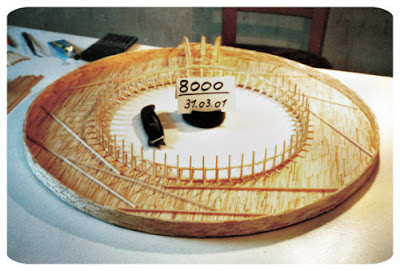
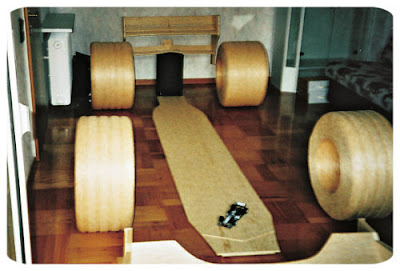
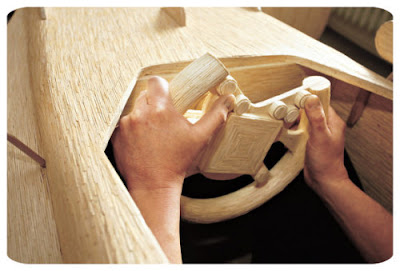
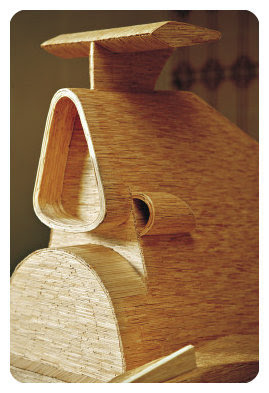
Man Builds Full Scale F1 Car From 956,000 Matchsticks
Man Builds Full Scale F1 Car From 956,000 Matchsticks Michael Arndt is a man of matchsticks. Over the course of six years, using 956,000 matchsticks, 1686 tubes of glue, and at least three different varieties of mustache, he built a full-scale replica of a McLaren 4/14 F1 car, at a cost of around 6000 Euros ($8,725). The giant model takes up Arndt's entire kitchen and probably his social life. It can be broken down into 45 parts for easy transport to various matchstick-builders conventions



 id="BLOGGER_PHOTO_ID_5215463403816598754" border="0" />


id="BLOGGER_PHOTO_ID_5215463403816598754" border="0" />Labels: amazing, Art, Design, Sports
Read more!Monday, June 23, 2008
World's Ugliest Dog Contest
Gus' crowned world's ugliest dog

Gus's owners say they plan to spend the prize money on cancer treatment
A three-legged, one-eyed, cancer-afflicted dog named Gus has been crowned the World's Ugliest Dog at a fair in California.
Gus, a Chinese Crested dog, beat allcomers to take the title at the Sonoma-Marin Fair.
Owner Jeanenne Teed, from Florida, said she would spend the $1,600 prize on treatment for Gus's skin cancer.
The competition has been running for 20 years, and is one of the fair's top attractions, organisers said.
Vicki DeArmon, marketing director of the fair, said that in the past few years, winners had been dogs that had been abandoned or neglected before being adopted by dog-lovers.

"They may look hard to love, but apparently they are not. I've never seen dogs better cared for," she added.
Gus was rescued from a bad home.
One of his legs was amputated as a consequence of his skin tumour.
He lost an eye to a tomcat in a fight.
Gus was rescued from a bad home.
One of his legs was amputated as a consequence of his skin tumour.
He lost an eye to a tomcat in a fight.
Labels: amazing, funny, Hilarious
Read more!Sunday, June 15, 2008
World's Wackiest Festivals
1.El Colacho: the Baby-Jumping Festival (Spain)
In celebration of the Catholic festival of Corpus Christi, grown men leap over newborns, with full parental consent. Donning scary, vaguely Elvis-like costumes and wielding whips and truncheons, the men attempt to "cleanse" the babies of evil. Evidently, recklessly leaping over them is the best way to achieve this. The town has observed the strange practice (called El Colacho) since 1620, and any onlookers who seem to be in need of a quick exorcism are pulled into the event, as well -- so look normal, by God! And leave your babies with the sitter.

2.Up Helly-Aa: the Fire Festival (Shetland Islands)

A tribute to the islands' Viking Past, Up Helly-Aa ("End of the Holy Days"), the fire festivals are held in Shetland annually in the middle of winter to mark the end of the yule season. The festival involves a procession of up to a thousand guizers, and culminates with the burning of a 32-ft. replica of a Viking longship. Due to the often-flamboyant costumes and the large quantity of males dressing up as females, it has earned the joke name 'Transvestite Tuesday'.
3.The Monkey Buffet Festival (Thailand)

Every year, all of the province's approximately 600 monkeys are invited to eat fruits and vegetables during an annual feast held in honor of Rama, a hero of the Ramayana, who, it is said, rewarded his friend and ally, Hanuman the Monkey King, with the fiefdom of what is now Lopburi. Organizers of the annual monkey buffet use more than 3,000 kg of fruits and vegetables for the festival.
4.Holi: the Festival of Colors (India)

Holi, also called the Festival of Colours, is a popular Hindu spring festival observed in India, Guyana, and Nepal. On the second day, known as Dhulhendi, people spend the day throwing colored powder and water at each other. The spring season, during which the weather changes, is believed to cause viral fever and cold. Thus, the playful throwing of the colored powders has a medicinal significance: the colors are traditionally made of Neem, Kumkum, Haldi, Bilva, and other medicinal herbs prescribed by Ayurvedic doctors.
5. Cheese Rolling Festival (England)

Though it sounds benign (and kind of goofy), cheese-rolling is very dangerous. Running full-tilt down a very steep hill behind a madly spinning 7-pound wheel of cheese can be well-nigh lethal. In fact, police have attempted to ban the event, but participants have refused to observe the ban. Men and their cheese wheels can not be separated easily, evidently. So what happens during a cheese roll? Simple: the cheese is set to rolling, and racers zoom down the hill after the cheese. However, as the cheese can reach speeds of up to 70 mph, it rarely happens that someone catches the cheese. First to the bottom wins the cheese. Glorious.
6. Maslenitsa: free-for-all boxing match (Russia)

In Orthodox countries, the week before Lent is marked with a series of celebrations, including a free-for-all boxing match in which there are no rules. In centuries past, the fight ended only when the participates were covered with blood and bereft of clothes.
7. Tunarama: the Tuna Tossing Festival (Australia)

The Tunarama festival is held in Port Lincoln, on the tip of Eyre Peninsula, over the Australia Day (26 January) long weekend. When the festival began in 1962, it was intended to promote the emerging tuna fishing industry in Port Lincoln. Tuna fishing is now one of the town's biggest industries and Australia's largest tuna cannery is located there. The highlight of the festival is the tuna tossing competition. Ex-Olympic hammer thrower, Sean Carlin, holds the record for the longest toss at 37.23 metres set in 1998.
8. Roswell UFO Festival (USA)

The Roswell UFO Festival celebrates the anniversary of the "Roswell Incident," when a UFO was said to have crashed into military grounds nearby. Featuring experts, authors, researchers, and lecturers dissecting the infamous incident, the celebration will also sport an alien parade, an alien costume contest , and an alien hot air balloon ride.
9. La Tomatina (Spain)

In late August, thousands of people pelt each other with over 250 lbs. of tomatoes in a span of 60 minutes in an event modestly described as the world's largest tomato fight. Every year, over 30,000 tourists come to Bunyol for this festival. Rules of conduct keep the festivities from becoming a more dangerous brawl.
In celebration of the Catholic festival of Corpus Christi, grown men leap over newborns, with full parental consent. Donning scary, vaguely Elvis-like costumes and wielding whips and truncheons, the men attempt to "cleanse" the babies of evil. Evidently, recklessly leaping over them is the best way to achieve this. The town has observed the strange practice (called El Colacho) since 1620, and any onlookers who seem to be in need of a quick exorcism are pulled into the event, as well -- so look normal, by God! And leave your babies with the sitter.
2.Up Helly-Aa: the Fire Festival (Shetland Islands)
A tribute to the islands' Viking Past, Up Helly-Aa ("End of the Holy Days"), the fire festivals are held in Shetland annually in the middle of winter to mark the end of the yule season. The festival involves a procession of up to a thousand guizers, and culminates with the burning of a 32-ft. replica of a Viking longship. Due to the often-flamboyant costumes and the large quantity of males dressing up as females, it has earned the joke name 'Transvestite Tuesday'.
3.The Monkey Buffet Festival (Thailand)
Every year, all of the province's approximately 600 monkeys are invited to eat fruits and vegetables during an annual feast held in honor of Rama, a hero of the Ramayana, who, it is said, rewarded his friend and ally, Hanuman the Monkey King, with the fiefdom of what is now Lopburi. Organizers of the annual monkey buffet use more than 3,000 kg of fruits and vegetables for the festival.
4.Holi: the Festival of Colors (India)
Holi, also called the Festival of Colours, is a popular Hindu spring festival observed in India, Guyana, and Nepal. On the second day, known as Dhulhendi, people spend the day throwing colored powder and water at each other. The spring season, during which the weather changes, is believed to cause viral fever and cold. Thus, the playful throwing of the colored powders has a medicinal significance: the colors are traditionally made of Neem, Kumkum, Haldi, Bilva, and other medicinal herbs prescribed by Ayurvedic doctors.
5. Cheese Rolling Festival (England)
Though it sounds benign (and kind of goofy), cheese-rolling is very dangerous. Running full-tilt down a very steep hill behind a madly spinning 7-pound wheel of cheese can be well-nigh lethal. In fact, police have attempted to ban the event, but participants have refused to observe the ban. Men and their cheese wheels can not be separated easily, evidently. So what happens during a cheese roll? Simple: the cheese is set to rolling, and racers zoom down the hill after the cheese. However, as the cheese can reach speeds of up to 70 mph, it rarely happens that someone catches the cheese. First to the bottom wins the cheese. Glorious.
6. Maslenitsa: free-for-all boxing match (Russia)
In Orthodox countries, the week before Lent is marked with a series of celebrations, including a free-for-all boxing match in which there are no rules. In centuries past, the fight ended only when the participates were covered with blood and bereft of clothes.
7. Tunarama: the Tuna Tossing Festival (Australia)
The Tunarama festival is held in Port Lincoln, on the tip of Eyre Peninsula, over the Australia Day (26 January) long weekend. When the festival began in 1962, it was intended to promote the emerging tuna fishing industry in Port Lincoln. Tuna fishing is now one of the town's biggest industries and Australia's largest tuna cannery is located there. The highlight of the festival is the tuna tossing competition. Ex-Olympic hammer thrower, Sean Carlin, holds the record for the longest toss at 37.23 metres set in 1998.
8. Roswell UFO Festival (USA)
The Roswell UFO Festival celebrates the anniversary of the "Roswell Incident," when a UFO was said to have crashed into military grounds nearby. Featuring experts, authors, researchers, and lecturers dissecting the infamous incident, the celebration will also sport an alien parade, an alien costume contest , and an alien hot air balloon ride.
9. La Tomatina (Spain)
In late August, thousands of people pelt each other with over 250 lbs. of tomatoes in a span of 60 minutes in an event modestly described as the world's largest tomato fight. Every year, over 30,000 tourists come to Bunyol for this festival. Rules of conduct keep the festivities from becoming a more dangerous brawl.
Labels: amazing, Entertainment, funny
Read more!Saturday, May 31, 2008
Color Pictures from England 1919 - 1924
The union Jack FrenchTricolour flutter above the lines of Troops marching through Knightsbridge during the World War One Victory Parade in 1919

A snapshot of London's Fleet Street home of the British press 1924

An early photograph taken in 1913 of a London residential stree

After the 1919 Victory Prade , London's Piccadilly Circus is eerily deserted

Children play on the cobbled streets of St. Ives

East Industry: Merchant ships are berthed on the bank of the Thames.

A snapshot of London's Fleet Street home of the British press 1924
An early photograph taken in 1913 of a London residential stree
After the 1919 Victory Prade , London's Piccadilly Circus is eerily deserted
Children play on the cobbled streets of St. Ives
East Industry: Merchant ships are berthed on the bank of the Thames.
Labels: amazing
Read more!