
Thursday, October 30, 2008
Abu Dhabi Sky Bridge Hotel

Abu Dhabi Sky Bridge Hotel
Total Area: 110,000m²
Number of Rooms: 264 (80-100m²)
Number of Suites: 40 (250m²)
Conference Area: 5,000m²
Commercial Area: 3,500m²
Restaurants: 2,600m²
Lobby: 4,250m² (108,000m³ volume)
Roof Garden: 5,400m²
Pedestrian Promenade: 11,200m²
Parking Area : 40,000m² x 2
(800 cars x2- 200 per floor)
Labels: Science
Read more!
Wednesday, June 25, 2008
Rotating skyscraper set for Dubai
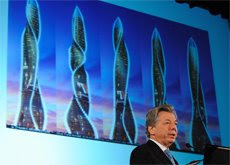
DYNAMIC TOWER: Italian architect David Fisher announces the world's first building in motion in New York. (Getty Images)
The "Dynamic Tower", a slender, shifting skyscraper of rotating luxury apartments, was presented in project-form Tuesday in New York by Italian architect David Fisher, before it goes up in Dubai.
The innovative, 420-metre building features 80 pre-fabricated apartments that spin 360 degrees, at voice command, around a central column by means of 79 power-generating wind turbines located between each floor.
"This building will have endless different shapes," Fisher told reporters.
As each floor rotates independently from the other, the Dynamic Tower will constantly change its profile, in a new architectural concept that is taking root around the world.
The Mirax group plans to build a similar, 70-story skyscraper in Moscow.
"We look forward to build a third one in New York and maybe in other cities," said Fisher.
"These buildings will open our vision all around, to a new life."
The apartments, ranging from 124 to 1,200 square metres will take between one and three hours to make a complete rotation, and at 30,000 dollars per square metre, will cost from $3.7 million to $36 million.
Fisher said the pre-fabricated components made in a plant in Altamura, southern Italy, will allow the skyscraper to go up in record time, one floor per week instead of the usual one-per-six-weeks for similar high rises, and slash building costs by 10 percent.
He said the skyscraper, which will be completely energy self sufficient and will cost an estimated $700 million dollars to build, should be operational in Dubai in 2010.
The "Dynamic Tower", a slender, shifting skyscraper of rotating luxury apartments, was presented in project-form Tuesday in New York by Italian architect David Fisher, before it goes up in Dubai.
The innovative, 420-metre building features 80 pre-fabricated apartments that spin 360 degrees, at voice command, around a central column by means of 79 power-generating wind turbines located between each floor.
"This building will have endless different shapes," Fisher told reporters.
As each floor rotates independently from the other, the Dynamic Tower will constantly change its profile, in a new architectural concept that is taking root around the world.
The Mirax group plans to build a similar, 70-story skyscraper in Moscow.
"We look forward to build a third one in New York and maybe in other cities," said Fisher.
"These buildings will open our vision all around, to a new life."
The apartments, ranging from 124 to 1,200 square metres will take between one and three hours to make a complete rotation, and at 30,000 dollars per square metre, will cost from $3.7 million to $36 million.
Fisher said the pre-fabricated components made in a plant in Altamura, southern Italy, will allow the skyscraper to go up in record time, one floor per week instead of the usual one-per-six-weeks for similar high rises, and slash building costs by 10 percent.
He said the skyscraper, which will be completely energy self sufficient and will cost an estimated $700 million dollars to build, should be operational in Dubai in 2010.
Labels: Design, Longest, Science, Technology, World Business
Read more!Genius in India!!--11 YEAR OLD ADMITTED TO UNI--HIS NAME IS AKRIT

A year ago a footage emerged from a remote village in India . The video showed a young girl receiving surgery to separate her fingers, which were badly burned and fused together. Why did this operation make headlines around the world? The surgery was performed by a 7-year-old boy named Akrit Jaswal.
Now 13 years old, Akrit has an IQ of 146 and is considered the smartest person his age in India -a country of more than a billion people. Before Akrit could even speak, his parents say they knew he was special.
'He learned very fast,' says Raksha, Akrit's mother. 'After learning the alphabet, we started to teach him joining of words, and he started writing as well. He was two.'
At an age when most children are learning their ABCs, Akrit was reading Shakespeare and assembling a library of medical textbooks. When he was 5 years old, he enrolled in school. One year later, Akrit was teaching English and math classes.
Akrit developed a passion for science and anatomy at an early age. Doctors at local hospitals took notice and started allowing him to observe surgeries when he was 6 years old. Inspired by what he saw, Akrit read everything he could on the topic. When an impoverished family heard about his amazing abilities, they asked if he would operate on their daughter for free. Her surgery was a success.
Now 13 years old, Akrit has an IQ of 146 and is considered the smartest person his age in India -a country of more than a billion people. Before Akrit could even speak, his parents say they knew he was special.
'He learned very fast,' says Raksha, Akrit's mother. 'After learning the alphabet, we started to teach him joining of words, and he started writing as well. He was two.'
At an age when most children are learning their ABCs, Akrit was reading Shakespeare and assembling a library of medical textbooks. When he was 5 years old, he enrolled in school. One year later, Akrit was teaching English and math classes.
Akrit developed a passion for science and anatomy at an early age. Doctors at local hospitals took notice and started allowing him to observe surgeries when he was 6 years old. Inspired by what he saw, Akrit read everything he could on the topic. When an impoverished family heard about his amazing abilities, they asked if he would operate on their daughter for free. Her surgery was a success.

After the surgery, Akrit was hailed as a medical genius in India . Neighbors and strangers flocked to him for advice and treatment. At age 11, Akrit was admitted to Punjab University .. He's the youngest student ever to attend an Indian university. That same year, he was also invited to London 's famed Imperial College to exchange ideas with scientists on the cutting edge of medical research.
Akrit says he has millions of medical ideas, but he's currently focused on developing a cure for cancer. 'I've developed a concept called oral gene therapy on the basis of my research and my theories,' he says. 'I'm quite dedicated towards working on this mechanism.'
Growing up, Akrit says he used to see cancer patients lying on the side of the road because they couldn't afford treatment or hospitals had no space for them. Now, he wants to use his intellect to ease their suffering. '[I've been] going to hospitals since the age of 6, so I have seen firsthand people suffering from pain,' he says. 'I get very sad, and so that's the main motive of my passion about medicine, my passion about cancer.'
Currently, Akrit is working toward a bachelor's degrees in zoology, botany and chemistry. Someday, he hopes to continue his studies at Harvard University ..
Akrit says he has millions of medical ideas, but he's currently focused on developing a cure for cancer. 'I've developed a concept called oral gene therapy on the basis of my research and my theories,' he says. 'I'm quite dedicated towards working on this mechanism.'
Growing up, Akrit says he used to see cancer patients lying on the side of the road because they couldn't afford treatment or hospitals had no space for them. Now, he wants to use his intellect to ease their suffering. '[I've been] going to hospitals since the age of 6, so I have seen firsthand people suffering from pain,' he says. 'I get very sad, and so that's the main motive of my passion about medicine, my passion about cancer.'
Currently, Akrit is working toward a bachelor's degrees in zoology, botany and chemistry. Someday, he hopes to continue his studies at Harvard University ..
Read more!
Monday, June 02, 2008
The World’s Most Unusual Plants & flowers
These are the top 4 of the most Unusual plants & flowers, enjoy!
1. Rafflesia arnoldii: this parasitic plant develops the world's largest bloom that can grow over three feet across. The flower is a fleshy color, with spots that make it look like a teenager's acne-ridden skin. It smells bad and has a hole in the center that holds six or seven quarts of water. The plant has no leaves, stems, or roots.


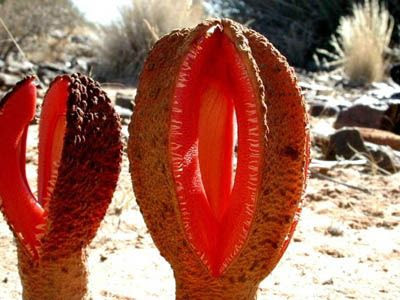
2. Hydnora africana, an unusual flesh-colored, parasitic flower that attacks the nearby roots of shrubby in arid deserts of South Africa. The putrid-smelling blossom attracts herds of carrion beetles.
The image “http://aycu02.webshots.com/image/30641/2001348574948645778_rs.jpg” cannot be displayed, because it contains errors.
3. Dracunculus vulgaris: smells like rotting flesh, and has a burgundy-colored, leaf-like flower that projects a slender, black appendage.
The image “http://aycu14.webshots.com/image/30653/2000186714960914519_rs.jpg” cannot be displayed, because it contains errors.


4. Amorphophallus: means, literally, "shapeless penis." The name comes from the shape of the erect black spadix.
1. Rafflesia arnoldii: this parasitic plant develops the world's largest bloom that can grow over three feet across. The flower is a fleshy color, with spots that make it look like a teenager's acne-ridden skin. It smells bad and has a hole in the center that holds six or seven quarts of water. The plant has no leaves, stems, or roots.
2. Hydnora africana, an unusual flesh-colored, parasitic flower that attacks the nearby roots of shrubby in arid deserts of South Africa. The putrid-smelling blossom attracts herds of carrion beetles.
The image “http://aycu02.webshots.com/image/30641/2001348574948645778_rs.jpg” cannot be displayed, because it contains errors.
3. Dracunculus vulgaris: smells like rotting flesh, and has a burgundy-colored, leaf-like flower that projects a slender, black appendage.
The image “http://aycu14.webshots.com/image/30653/2000186714960914519_rs.jpg” cannot be displayed, because it contains errors.
4. Amorphophallus: means, literally, "shapeless penis." The name comes from the shape of the erect black spadix.
Labels: Science
Read more!Wednesday, May 14, 2008
Do not eat these mini lobsters It may infect your lung
Seafood lovers, be careful. These creatures are actually NOT Lobsters. Please read on...


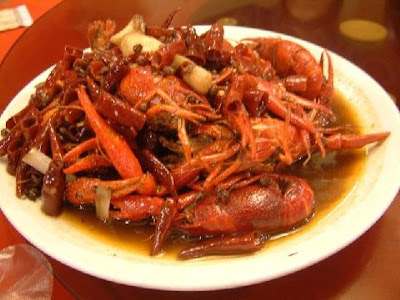
Do not eat these mini lobsters.
These mini crustaceans are literally the garbage cleaners in the sewage treatment plants.
The 'dirtier' the water, the fatter these mini lobsters become.
Their lungs are full of worms and their flesh saturated with poisonous metals.
Unscrupulous merchants somehow found a way to get these marketed to eateries.
Do not order this dish.
Pass this on to those friends who may want to try these mini 'lobsters'.
Do not eat these mini lobsters.
These mini crustaceans are literally the garbage cleaners in the sewage treatment plants.
The 'dirtier' the water, the fatter these mini lobsters become.
Their lungs are full of worms and their flesh saturated with poisonous metals.
Unscrupulous merchants somehow found a way to get these marketed to eateries.
Do not order this dish.
Pass this on to those friends who may want to try these mini 'lobsters'.
Labels: Science
Read more!Monday, April 21, 2008
World's First Scar-free Appendectomy

The world's first scar-free appendectomy has been successfully performed at University of San Diego Medical Centre, USA. Jeff Scholtz, a former U.S. marine, has recently secured his place in medical history, becoming the first patient in the world who had his appendix through mouth removed.
The operation, which is a major advance in the quest for scar-free surgery, was performed by doctors in San Diego, California, who used a flexible tube to thread miniature surgical instruments down the 42-year-old's throat to his stomach.
A tiny incision was then made in the stomach wall to get at the appendix - a small worm-like pouch attached to the large bowel.
The inflamed appendix was cut away, bagged and pulled back into the stomach - and out of the mouth.

Labels: Science, Technology
Read more!Friday, April 18, 2008
Baby Mammoth's Innards Scanned

April 11, 2008—A Tokyo medical team prepares to CT-scan the world's best preserved mammoth—missing only her tail and shaggy coat.
Completed by February, the resulting 3-D images (not yet released to the public) provide the first detailed look at a prehistoric animal's insides, Russian scientists announced this week.
A hunter found 37,000-year-old "Lyuba" in Arctic Russia in May 2007 . She was later shipped to Tokyo's Jikei University School of Medicine and is now back in Russia for biopsies and detailed genetic analysis.
Researchers hope to sequence the entire mammoth genome from Lyuba and uncover ancient viruses in her tissues.

A CT scan of the baby mammoth Lyuba lights up a monitor at a Tokyo medical school. A Japanese team captured 3-D images by February 2008 of individual body parts, such as her liver and heart, though they have not yet been released to the public.
Russian biologist Alexei Tikhonov said, “Now we can see all the internal organs in their natural positions inside the body."
Read more!
Monday, April 14, 2008
A Rare Prehistoric Shark
A rare prehistoric shark was discovered by local residents in Shizuoka, southwest of Tokyo. The huge eel-like creature, considered to be a living fossil, was taken to Japan's Awashima Marine Park and placed in a seawater pool. But the new environment was fatal and, only just a few hours after it was moved, the unusual shark died


Read more!
Read more!
Tuesday, April 08, 2008
King Cobra
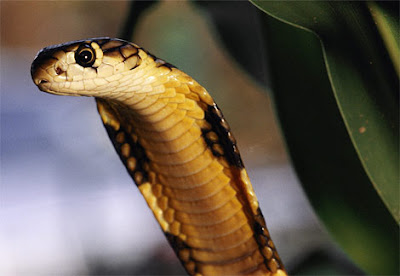 King Cobra
It seems unfairly menacing that a snake that can literally "stand up" and look a full-grown person in the eye would also be among the most venomous on the planet, but that describes the famous king cobra.
King cobras can reach 18 feet (5.5 meters) in length, making them the longest of all venomous snakes. When confronted, they can raise up to one-third of their bodies straight off the ground and still move forward to attack. They will also flare out their iconic hoods and emit a bone-chilling hiss that sounds almost like a growling dog.
Their venom is not the most potent among venomous snakes, but the amount of neurotoxin they can deliver in a single bite—up to two-tenths of a fluid ounce (seven milliliters)—is enough to kill 20 people, or even an elephant. Fortunately, king cobras are shy and will avoid humans whenever possible, but they are fiercely aggressive when cornered.
King cobras live mainly in the rain forests and plains of India, southern China, and Southeast Asia, and their coloring can vary greatly from region to region. They are comfortable in the trees, on land, and in water, feeding mainly on other snakes, venomous and nonvenomous. They will also eat lizards, eggs, and small mammals.
They are the only snakes in the world that build nests for their eggs, which they guard ferociously until the hatchlings emerge.
King cobras may be best known as the species of choice for the snake charmers of South Asia. Although cobras can hear, they are actually deaf to ambient noises, sensing ground vibrations instead. The charmer's flute entices the cobra by its shape and movement, not by the music it emits.(NGC)
Labels: Science
Read more!Tuesday, March 25, 2008
Top 5 Reasons It Sucks to Be an Engineering Student
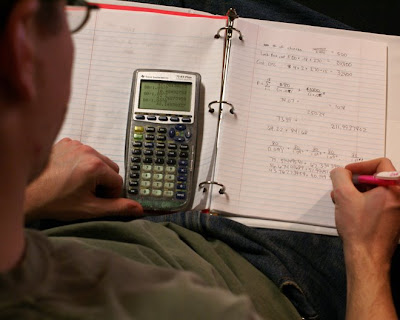
5. Awful Textbooks
Thick, dry, black and white manuscripts are rarely a source of inspiration and sometimes can cause loads of confusion. Often, the text is poorly written and interrupted by lengthy equations with symbols that are different from those used by the professor during lectures.
4. Professors are Rarely Encouraging
During each class, a professor that would rather be tending to his research will waltz up to a blackboard or overhead projector and scribble out equations for an hour without uttering a single sentence to create some excitement.
3. Dearth of Quality Counseling
College students may not have a sense for how to build their resume and they might be clueless about the variety of career opportunities that await them. Unfortunately, some academic advisers do little more than post fliers about internships and hand out a checklist of classes to take. They should make some projections about the future job market, learn about the interests of each young scholar, and offer them tailored advice for how to best prepare themselves.
2. Other Disciplines Have Inflated Grades
Brilliant engineering students may earn surprisingly low grades while slackers in other departments score straight As for writing book reports and throwing together papers about their favorite zombie films.
Some professors view undergraduate education as a type of natural selection, but their analogy is flawed. Many of the brightest students may struggle while mediocre scholars can earn top scores because they have a larger group of supportive friends to or more time to dedicate to studying.
1. Every Assignment Feels the Same
Nearly every homework assignment and test question is a math problem. Only a few courses require creativity or offer hands-on experience.
If you want to complain about your education, or our list, this is your chance. Leave a comment!
Photo: laffy4k/flickr
Labels: Science
Read more!Sunday, March 09, 2008
Earth at Night

Friday, March 07, 2008
Smiley Spider
Found only on the islands of Oahu, Molokai, Maui, and Hawaii, the happy face spider, such as this one guarding its eggs on a leaf in Maui, is known for the unique patterns that decorate its pale abdomen. Scientists believe Theridion grallator may have developed its distinctive markings to discourage birds from eating it.
This photo is part of the Best Photos of The Day for 2007 @ National Geographic. Click to see the rest of the collection.

Read more!
Monday, February 25, 2008
Glass Tulipsand Other Eco Systems Found in Antarctic Seabed

Standing in fields like poppies these tunicates are actually animals.
The tunicates, which resemble glass tulips, are early colonizers of Antarctic regions that have been disturbed by icebergs that scour the seafloor as they pass by.
The animals are among many mysterious creatures collected from the icy waters by scientists of the Australian Antarctic Division.
The tunicates, which resemble glass tulips, are early colonizers of Antarctic regions that have been disturbed by icebergs that scour the seafloor as they pass by.
The animals are among many mysterious creatures collected from the icy waters by scientists of the Australian Antarctic Division.

A giant scale worm sits on the Antarctic seabed at 2,116 feet (645 meters) deep.
At 10 inches (250 millimeters) long and weighing 11 ounces (300 grams), the worm is an example of a phenomenon called ''gigantism,'' which scientists still do not fully understand.
''Gigantism is very common in Antarctic waters,'' Martin Riddle said in a statement released February 19, 2008. The Australian Antarctic Division scientist led the recent expedition that photographed this worm and other animals.
''We have collected huge worms, giant crustaceans, and sea spiders the size of dinner plates.''
At 10 inches (250 millimeters) long and weighing 11 ounces (300 grams), the worm is an example of a phenomenon called ''gigantism,'' which scientists still do not fully understand.
''Gigantism is very common in Antarctic waters,'' Martin Riddle said in a statement released February 19, 2008. The Australian Antarctic Division scientist led the recent expedition that photographed this worm and other animals.
''We have collected huge worms, giant crustaceans, and sea spiders the size of dinner plates.''

A diverse ecosystem thrives on the Antarctic seabed, 1,968 feet (600 meters) off the front of the continental shelf.
Here brightly colored coralline bryozoans and sponges create a habitat for other species such as octopus, mollusks, and fish.
Bryozoans have similar calcium carbonate skeletons as tropical corals, though they belong to a different biological group.
Scientists from Australia, France, and Japan collected specimens from up to 6,500 feet (2,000 meters) beneath the oceans off Antarctica during a two-month census of Antarctica led by the Australian Antarctic Division.
The specimens will be sent to universities and museums around the world for identification, tissue sampling, and DNA studies, the Associated Press reported on February 20, 2008.
"Not all of the creatures that we found could be identified and it is very likely that some new species will be recorded as a result of these voyages," Graham Hosie, head of the census project, told the AP.
Here brightly colored coralline bryozoans and sponges create a habitat for other species such as octopus, mollusks, and fish.
Bryozoans have similar calcium carbonate skeletons as tropical corals, though they belong to a different biological group.
Scientists from Australia, France, and Japan collected specimens from up to 6,500 feet (2,000 meters) beneath the oceans off Antarctica during a two-month census of Antarctica led by the Australian Antarctic Division.
The specimens will be sent to universities and museums around the world for identification, tissue sampling, and DNA studies, the Associated Press reported on February 20, 2008.
"Not all of the creatures that we found could be identified and it is very likely that some new species will be recorded as a result of these voyages," Graham Hosie, head of the census project, told the AP.
Read more!
Sunday, January 27, 2008
Tourist Spaceship Design Unveiled

Entrepreneur Richard Branson and aircraft designer Burt Rutan unveiled this model of SpaceShipTwo—a shuttle planned to start ferrying tourists into space within a few years—in New York on January 23, 2008.
The presentation also included a model of WhiteKnightTwo, the four-engine airplane that will carry SpaceShipTwo into its midair launch position.
By:
David B. Caruso in New York
Associated Press
January 24, 2008
Within a few years a handful of rich tourists may be blasting into space in a craft that combines the aesthetics of the space shuttle and a corporate jet.
British billionaire Richard Branson and aerospace designer Burt Rutan unveiled a model Wednesday of SpaceShipTwo, the vehicle they hope will take passengers on suborbital joy rides.
"Breathtakingly beautiful," was Branson's assessment of the ship, which is now under construction at a hangar in the Mojave Desert and which may begin test flights as soon as this year.
The presentation also included a model of WhiteKnightTwo, the four-engine airplane that will carry SpaceShipTwo into its midair launch position.
By:
David B. Caruso in New York
Associated Press
January 24, 2008
Within a few years a handful of rich tourists may be blasting into space in a craft that combines the aesthetics of the space shuttle and a corporate jet.
British billionaire Richard Branson and aerospace designer Burt Rutan unveiled a model Wednesday of SpaceShipTwo, the vehicle they hope will take passengers on suborbital joy rides.
"Breathtakingly beautiful," was Branson's assessment of the ship, which is now under construction at a hangar in the Mojave Desert and which may begin test flights as soon as this year.
Labels: Design, Science, World Business
Read more!Monday, January 14, 2008
Solar Storms

Space Weather Forecast: More Solar Storms on the Way Click here to find out more!
John Roach
NGC
The appearance last Friday of a lone dark spot on the sun signals that a new 11-year cycle of heightened solar activity is on the horizon, experts said. Solar storms can knock out power grids, shut down satellite communications, and expose spacewalking astronauts to harmful radiation.
"We can now expect to see an increasing number of sunspots from [this new] cycle," said Douglas Biesecker, a solar physicist with the U.S. government's Space Weather Prediction Center in Boulder, Colorado.
Sunspots mark where a region of intense magnetic field from deep inside the sun emerges on its surface. The spots alone do not cause so-called space weather, but they are related to solar storms. More sunspots mean more stormy space weather.
The spots occur in cycles of increasing and decreasing activity that last approximately 11 years.
The last phase of heightened activity, dubbed Solar Cycle 23, peaked in 2000. The sunspot observed high in the sun's northern hemisphere on January 3 is the first definitely associated with Cycle 24, Biesecker explained.
"Seeing the first sunspot of the next solar cycle is important because it does mean that finally we're seeing what will be the eventual end of Cycle 23," he said.
For accounting purposes, Cycle 24 officially begins when the number of spots associated with it outnumbers the sunspots associated with Cycle 23, he added. That should occur within months.
David Hathaway is a solar physicist with the NASA Marshall Space Flight Center in Huntsville, Alabama. He equated last week's sunspot to the first kernel in a batch of popcorn going off.
"It takes them going off repeatedly before the new cycle takes over," he said.
Labels: Science
Read more!Monday, December 24, 2007
Antigravitational Water
Cool trick, sent by Paula. Watch also this man on steroid and these antigravitational photos.
Labels: Science, Technology
Read more!Thursday, August 02, 2007
Where Sheep Outnumber Humans

Merino sheep, prized for their fine wool, cloak Alpine foothills. The first sheep in New Zealand arrived courtesy of Capt. James Cook in 1773. They now outnumber humans in New Zealand by a ratio of 12 to 1.

New Zealand has 45 million sheep and produces the finest wool in the world and is also the biggest producer of wool in the world after Australia. The sheep outnumber the country's human population by more than 11 or 12 to one.
British colonists first successfully introduced sheep to New Zealand in the early 1800s. Today there are six main sheep breeds, and about 30 breeds in total. Farmers keep breeds that best suit their type of farmland and climate.
The Merino, for instance, is favoured in the alpine grasslands of the South Island's Southern Alps. Halfbreds and Corriedales are bred on the foothills and plains east of the Alps. Romneys, Coopworths and Perendales are typical of the 'crossbred' breeds, used for meat
and wool production.
Labels: Science
Read more!Tuesday, July 31, 2007
Blue-spot attracts divers from around the world
Blue Dyra (Belize) - The Belizean Barrier Reef, the second largest in the world after Australia's Great Barrier Reef. It stretches 280 km. Solid wall along the coast of Belize, about 13 to 24 km. away and is an almost pristine underwater world Sea bed between reff and the mainland flat and sandy, in some places it shaft to the surface, forming a low, wooded islands of mangrove forests.


Labels: Science
Read more!Monday, July 23, 2007
Islamic Art Exhibition in London
Art challenge cliches on Islam
| By Stephanie Holmes BBC News ___________________________________________________________________ |
 The fabric of the Mongol robe was embellished with designs in gold |
 The Blue Koran: one of the most sumptuous examples of the text |
Flowering trees Other texts on display include a single page from a vast Koran whose pages stretch 2m (6.5ft) in height and a scroll the width of a palm with a microscopic text probably painted with a single-haired brush. Organisers also hope the exhibition will also break stereotypes about Islam as an austere faith.
 |  |
The Spirit & Life exhibition, Masterpieces of Islamic Art from the Aga Khan Museum Collection, is on display at London's Ismaili Centre until 31 August 2007.

A page from the luxurious 'Blue Koran', made in North Africa, and dating from the 10th Century.

The top section of a robe from the Mongol period with very long sleeves and intricate buttons.

A folio from the Akhlaq-i Nasiri, a philosophical treatise written by one of Iran's greatest medieval intellects, Nasir al-Din Tusi.

A detail from probably the earliest manuscript of part of the Canon of Medicine, one of the most influential texts in the history of medicine.

A bird-shaped medieval bronze incense burner. The perfumed smoke would come out of small holes in the container.

An Iranian glazed dish with the inscription: "Generosity is a disposition of the dwellers of paradise."

A detail from the Shahnama, a manuscript made for a Persian ruler and decorated with 258 miniatures in gold and inks.
Read more!